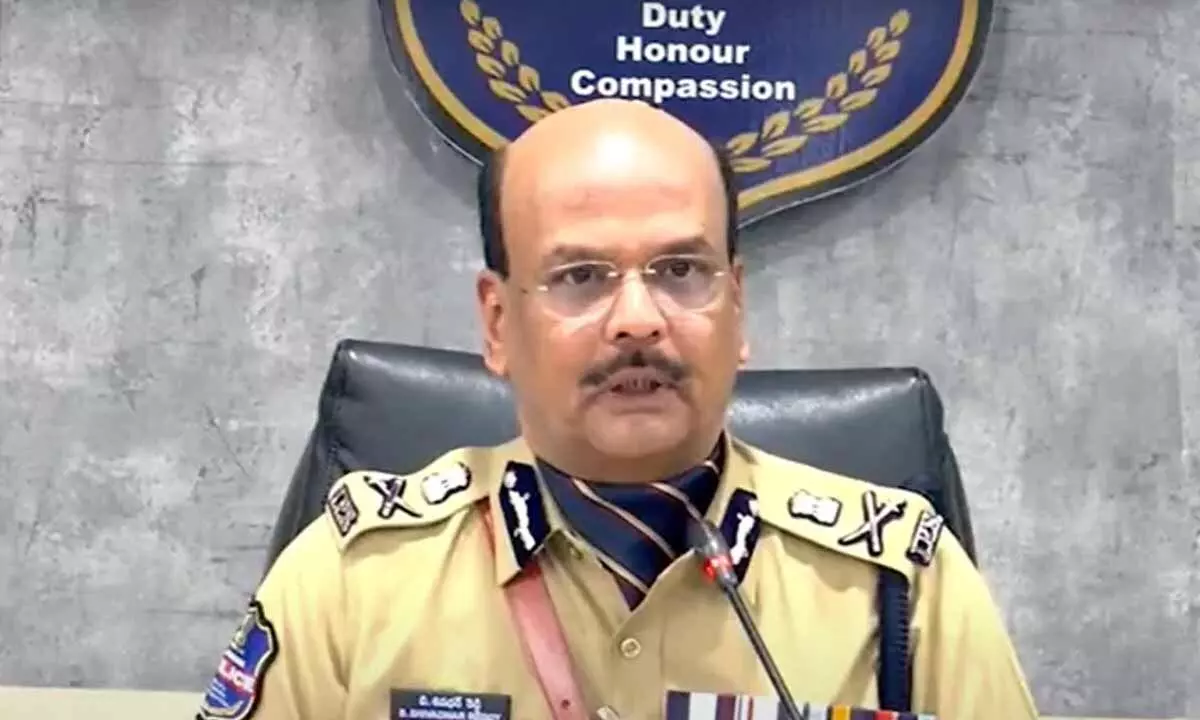

Shivadhar Reddy belongs to a rare breed of Indian police officers who treated the Constitution not as a slogan, but as an operational manual. In a system where policing often bends to political pressure, public sentiment, or bureaucratic inertia, Shivadhar Reddy carved out a reputation as a thinking cop—one who believed that law enforcement must be rooted in legality, proportionality, and moral restraint.
He never cultivated celebrity status. He did not chase viral moments or post-retirement visibility. Yet, within policing circles and civil society in Telangana, his name carries quiet weight.
An officer shaped by restraint, not aggression
Shivadhar Reddy’s policing philosophy stood apart from the stereotypical “strongman cop” archetype. He believed authority did not come from fear, but from credibility. At a time when encounter culture and performative toughness often defined public perception of policing, Reddy consistently emphasised procedure over spectacle.
His approach was deeply legalistic—sometimes frustratingly so for those who wanted quick results. But that was precisely the point. For Reddy, shortcuts were not efficiency; they were institutional decay.
Navigating Telangana’s most sensitive fault lines
Serving in Telangana meant policing a region shaped by agitation, political mobilisation, student movements, and deep historical grievances. Law and order here was never merely about crime—it was about managing legitimacy.
Reddy handled some of the most politically sensitive situations of the state’s formative years, where the line between protest and provocation was deliberately blurred. His insistence on:
- Minimal force
- Clear documentation
- Accountability within the force
often prevented escalation in moments that could easily have spiralled into violence.
A cop uncomfortable with power misuse
What made Shivadhar Reddy “difficult” in administrative terms was also what made him valuable. He was unwilling to treat police authority as a tool for settling political scores or silencing dissent.
Colleagues recall that he questioned oral instructions, demanded written orders, and refused to act on vague “signals” from above. In a hierarchy-driven system, this was risky behaviour. It stalled promotions, delayed postings, and quietly marked him as “non-compliant.”
But Reddy saw this as the cost of institutional integrity.
Policing as a constitutional function
Unlike many officers who saw themselves primarily as executors of government will, Reddy repeatedly articulated that the police serve the Constitution first, the law second, and the government only within those limits.
This distinction may sound academic—but in practice, it determines whether a police force protects citizens or merely controls them.
His internal notes, briefings, and training interventions often stressed:
- Due process over detention
- Evidence over confession
- Prevention over punishment
These ideas rarely make headlines—but they determine whether a democracy survives stress.
The price of being principled
Shivadhar Reddy’s career was not defined by rapid elevation or plum postings. Instead, it reflected the familiar arc of principled officers in India—respected privately, sidelined publicly.
He was transferred frequently. He was rarely projected. He was almost never celebrated. But he was trusted—by subordinates who knew he would not abandon them to political pressure, and by citizens who sensed fairness in his conduct.
Influence beyond rank
Perhaps Reddy’s most underrated contribution lies in mentorship. Younger officers exposed to his working style absorbed a different model of policing—one that values calm over command, legality over force, and patience over panic.
Many of these officers carried that influence forward, subtly shaping policing culture in ways that statistics will never capture.
Why Shivadhar Reddy matters today
In an age when policing is increasingly politicised, centralised, and performative, Shivadhar Reddy represents an alternative tradition—one that India desperately needs to rediscover.
He reminds us that:
- The strongest police officer is not the loudest
- The most effective authority is often invisible
- Institutional trust is built slowly, but destroyed instantly
For Icons of India, Shivadhar Reddy is not an icon because he was flawless or famous—but because he chose to be lawful when it was inconvenient, restrained when force was easier, and silent when self-promotion was tempting.
An icon of institutional conscience
India often celebrates rebels and rulers. It rarely celebrates custodians—those who quietly hold institutions together by refusing to let them rot from within.
Shivadhar Reddy IPS belongs to that endangered category.
He did not change the system overnight.
He did not bend it to his will.
He simply refused to let it bend him.
And that, in today’s India, is icon-worthy.