
Smriti Mandhana did not arrive at the top of world cricket by waiting for the ecosystem to catch up with her ambition. She arrived by forcing the ecosystem to evolve.
In an era where women’s sport in India is finally receiving attention, it is tempting to view Mandhana as a beneficiary of changing times. That would be inaccurate. She is not a product of momentum — she is one of its primary engines. Her career represents a generational shift: from gratitude for opportunity to expectation of excellence.
Mandhana’s importance goes beyond runs scored or covers driven. She has come to symbolise something rarer in Indian sport — confidence without apology.
Growing Up Ahead of Her Time
Born into a cricketing household in Sangli, Maharashtra, Smriti Mandhana’s relationship with the game was shaped early and decisively. Her father and brother were both cricketers, and the language of cricket was spoken fluently at home. What was not available, however, was a clearly defined pathway for a young girl with elite ambitions.
Indian women’s cricket in the early 2000s existed on the margins — underfunded, under-covered, and under-imagined. Mandhana’s early years were therefore marked by a paradox: exceptional talent developing in relative invisibility.
What separated her from many prodigies was not early hype but early clarity. She understood, instinctively, that if she was to compete at the highest level, her game had to be aesthetically pleasing and technically uncompromising. Style alone would not survive international cricket.
A Batting Style That Changed Expectations
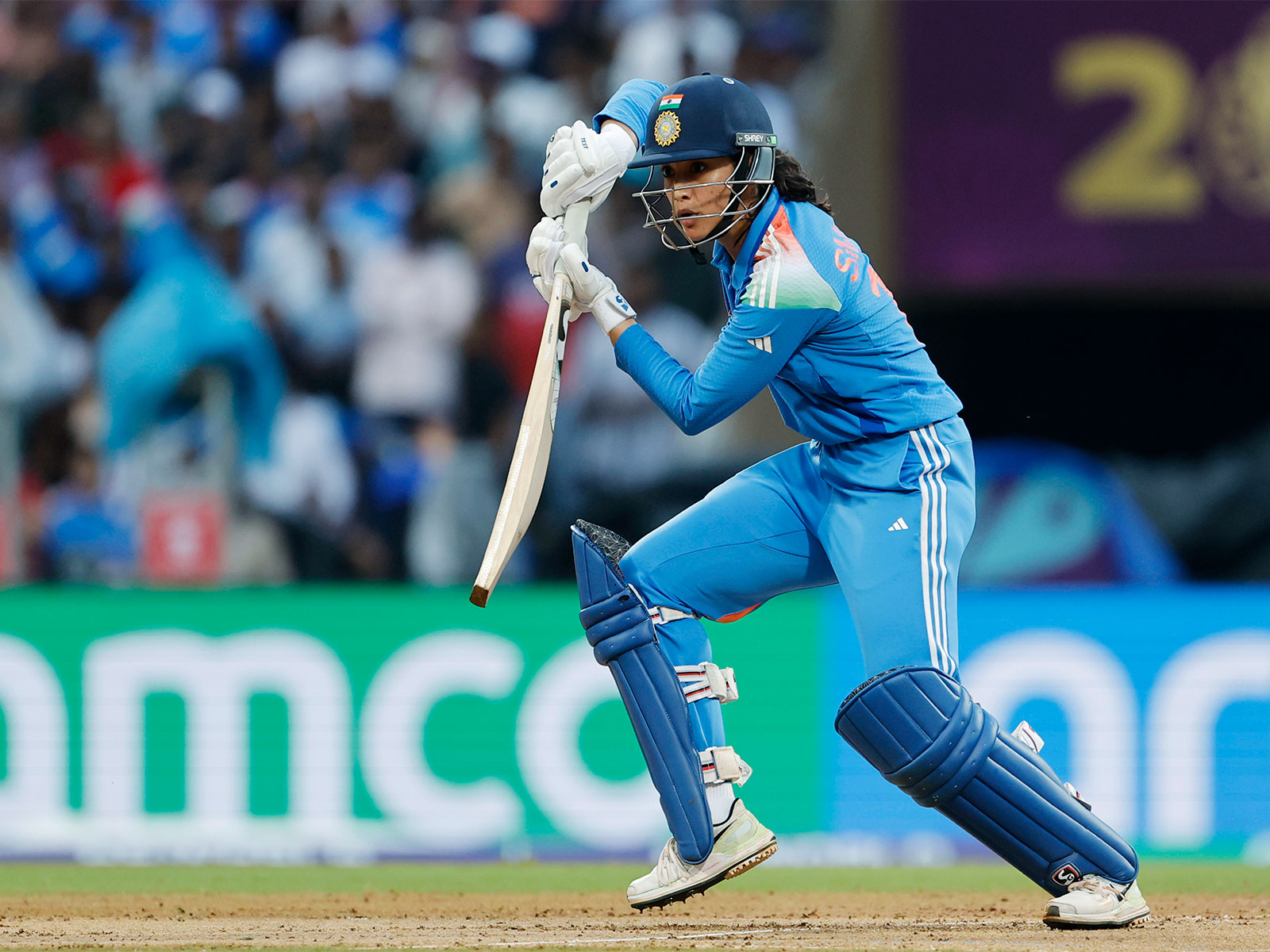
Smriti Mandhana’s batting immediately stood apart. Her cover drive — now iconic — is often discussed in aesthetic terms, but its real significance lies elsewhere. It is a shot born of balance, timing, and intent, not brute force. It reflects a mindset that prioritises control over chaos.
At a time when women’s cricket globally was still fighting stereotypes of conservatism, Mandhana played with freedom. She attacked fast bowlers early, trusted her footwork, and refused to reduce her game to “safe” options.
This mattered. Because visibility shapes aspiration. Mandhana didn’t just score runs; she redefined how a generation of Indian girls imagined batting.
International Stardom Without Compromise
Mandhana’s rise in international cricket was steady rather than explosive. She did not have a single tournament that “announced” her arrival. Instead, she accumulated credibility — series by series, format by format.
Her success in overseas leagues, including stints in Australia and England, further reinforced her standing as a global cricketer rather than a domestic star. These experiences sharpened her adaptability and exposed her to professional environments where women’s cricket was already treated as a serious sporting enterprise.
Crucially, Mandhana never attempted to reinvent herself for markets or narratives. She did not chase aggression for optics or restraint for approval. Her game evolved, but her identity remained intact.
Leadership in the Age of Visibility
The advent of the Women’s Premier League (WPL) marked a turning point for women’s cricket in India, and Smriti Mandhana found herself at its centre. As captain of Royal Challengers Bangalore, she carried not just tactical responsibility but symbolic weight.
Leadership, in her case, was not performative. She led by setting standards — in preparation, in body language, and in expectation. The visibility of the WPL amplified her influence, but it also magnified scrutiny. Mandhana navigated this with a calm that suggested long familiarity with pressure.
In many ways, her captaincy mirrored her batting: elegant, assertive, and grounded in fundamentals rather than theatrics.
A Cultural Shift, Not Just a Sporting One
What makes Smriti Mandhana especially relevant today is the space she occupies beyond the boundary. She is one of the few Indian women athletes to command both sporting respect and mainstream visibility without dilution.
Endorsements followed success, but they never defined it. Mandhana has remained careful about where her public image intersects with her professional identity. She represents a generation of athletes who see branding as a by-product, not a purpose.
In a country where women athletes are often celebrated conditionally — as exceptions rather than equals — Mandhana’s normalisation of excellence is quietly radical.
The Burden and Privilege of Being First
With prominence comes responsibility, and Mandhana is acutely aware of this. She is often the first reference point when discussions about women’s cricket arise — a role that can flatten complexity. Yet she has managed to carry this burden without allowing it to distort her career.
She does not speak as a spokesperson for all women’s cricket, nor does she retreat into individualism. Her stance has been consistent: performance is the most persuasive argument.
That philosophy has arguably done more for the sport than any manifesto could.
Legacy Still in Motion
Smriti Mandhana’s story is far from complete. She is still in her prime, still refining her game, still adding layers to her leadership. This makes any attempt at definitive assessment premature.
But even now, her impact is undeniable. She stands at the intersection of talent and timing, embodying what becomes possible when excellence is pursued without waiting for permission.
For IconsIndia, Mandhana represents a new kind of icon — not one forged in adversity alone, but one shaped by expectation, professionalism, and quiet authority.
She did not just arrive at the future of Indian sport.
She helped build it.