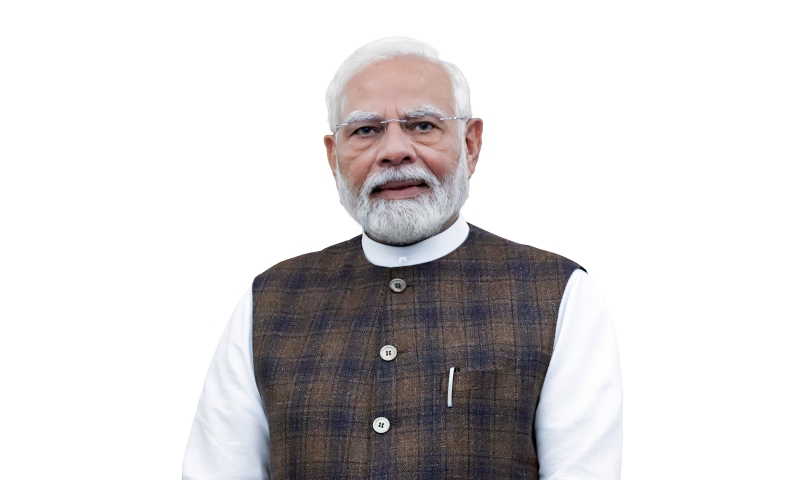

For over a decade, Narendra Modi has stood at the center of India’s political imagination. To supporters, he is a decisive reformer who gave India confidence and global stature. To critics, he is a polarising figure whose style challenges traditional democratic norms. But love him or oppose him, one truth is unavoidable: Narendra Modi is not just a politician anymore — he is an icon who reshaped how power is built, communicated, and sustained in modern India.
Modi’s rise did not follow the usual corridors of elite politics. He did not inherit power, nor was he groomed by legacy privilege. His story — from a tea seller to the Prime Minister — became a powerful narrative weapon. In Indian politics, perception matters as much as policy, and Modi mastered this earlier than anyone else. He did not merely run for office; he crafted a persona that millions could emotionally invest in.
What separates Modi from earlier prime ministers is his direct relationship with the public. Previous leaders governed institutions. Modi governs attention. His speeches, radio programs like Mann Ki Baat, social media presence, and visual symbolism are tightly controlled and carefully designed. He speaks not through intermediaries, but to people — often bypassing traditional media entirely. This shift changed the rules of political communication in India.
Economically, Modi’s tenure is filled with bold bets. Demonetisation shocked the system. GST attempted to unify a fragmented tax structure. Digital India pushed financial inclusion through UPI and Aadhaar-linked services. Not all outcomes were perfect, and some decisions came at high short-term cost. Yet, what defines Modi’s approach is not risk avoidance, but risk ownership. He chooses impact over consensus — a style that resonates strongly in a country tired of slow governance.
On the global stage, Modi transformed India’s diplomatic posture. From being cautious and reactive, India became visible and vocal. Whether addressing the UN, engaging with the Quad, or positioning India as a manufacturing alternative to China, Modi presented India as confident, civilisational, and strategic. He sold not just policies, but a vision of India reclaiming its place in the world order.
Critics argue that this centralisation of power weakens institutions. There is merit in the concern. Strong leadership often walks a thin line between decisiveness and dominance. Modi’s governance style places enormous authority in the Prime Minister’s Office, leaving less room for dissent within the system. Opposition voices struggle not just electorally, but narratively. In Modi’s India, controlling the story often matters more than winning the argument.
Yet, this dominance also reveals a deeper truth about contemporary politics: people crave clarity. Modi offers certainty in a chaotic world. He speaks in binaries — development versus corruption, nationalism versus appeasement, discipline versus disorder. These frames simplify complex realities, but they also mobilise mass support. In an era of fragmented attention, simplicity wins.
Another defining aspect of Modi’s icon status is symbolism. From temple inaugurations to international yoga events, from traditional attire abroad to ritualistic imagery at home, Modi consciously blends culture with governance. This fusion appeals deeply to a population reconnecting with identity and heritage after decades of technocratic politics. To many, he does not just represent the state — he represents civilisational pride.
The real reason Narendra Modi remains electorally dominant is not just performance, but absence of an alternative narrative powerful enough to replace him. Opposition parties often react to Modi instead of redefining politics beyond him. As long as Modi remains the axis around which every political debate rotates, his relevance stays intact.
Icons are not flawless. They are amplified. Modi’s legacy will be debated for decades — on economic inequality, media freedom, institutional independence, and social harmony. But history will record this much clearly: Narendra Modi altered the grammar of Indian politics. He turned leadership into a brand, governance into a spectacle, and the Prime Minister into a constant presence in everyday life.
Whether India eventually moves beyond the Modi era or deepens into it, one thing is certain. Indian politics will never return to what it was before him. And that, more than any single policy or election victory, is what makes Narendra Modi a true political icon of our time.